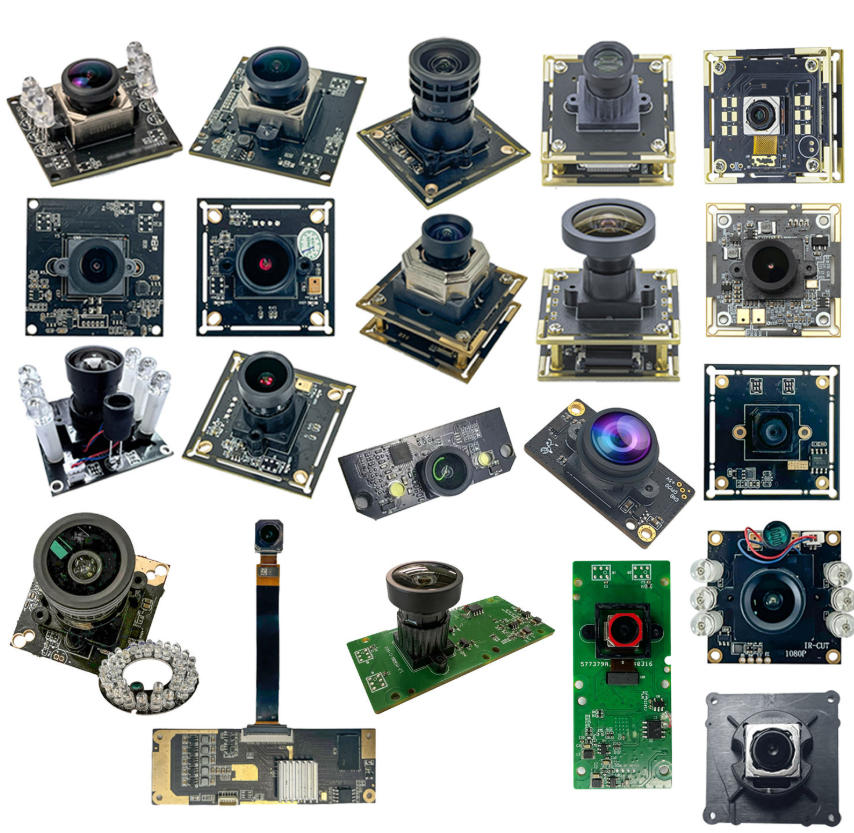
4k camera module,
autofocus camera board,
hdr usb camera module,
AI Camera Module Classification and Product Applications
Based on technical architecture, imaging methods, and application scenarios, AI cameras can be categorized into the following major classifications:
I. Classification by Imaging Technology
1. RGB / RGB-D Cameras
Technical Features: RGB cameras capture visible light spectra (400–700 nm), closely mimicking human vision. RGB-D cameras add depth sensors to RGB technology, enabling them to capture 3D spatial data.
- Smartphones: Facial recognition and photo background blurring (bokeh effects).
- Retail Stores: Virtual fitting mirrors (measuring height and body shape in 3D to overlay apparel in real time).
- Robotics: Object recognition, pose estimation, and environmental awareness.
- Gaming Devices: Gesture-based interactive gaming (e.g., Microsoft Kinect-style products).
2. Stereo and Time-of-Flight (ToF) Cameras
Technical Features: Stereo cameras calculate depth by comparing images taken from multiple angles. ToF sensors emit infrared light and measure distance based on the light’s travel time, delivering millisecond-level depth perception.
- Smartphones: Secure facial unlocking, AR special effects, and photographic bokeh (used in models like Samsung S20 Ultra, Huawei P30 Pro, etc.).
- Autonomous Driving: Obstacle detection, pedestrian recognition, and Automatic Emergency Braking (AEB).
- Gesture Recognition: Touchless interactive control terminals.
- Augmented Reality (AR): Real-time 3D environment modeling.
3. Infrared / Thermal Imaging Cameras
Technical Features: These detect infrared radiation emitted by objects to measure temperature. They are completely unaffected by ambient visible light and operate beyond the range of human sight.
- Industrial Equipment: Overheating alerts for power grids, motor bearing temperature monitoring, and predictive maintenance.
- Firefighting: Fire scene search-and-rescue and hotspot localization.
- Smart Agriculture: Livestock health monitoring (identifying abnormal body temperatures).
- Building Inspection: Thermal leak detection and wall insulation assessment.
- Security Surveillance: Personnel detection in pitch-black nighttime environments.
4. Multispectral / Hyperspectral Cameras
Technical Features: Capable of recording multiple spectral bands (including ultraviolet and infrared) in a single shot, capturing data completely invisible to the naked eye.
- Agricultural Drones: Crop health monitoring (evaluating plant vitality via near-infrared reflection) and early pest/disease detection.
- Medical Imaging: Tissue lesion detection and blood vessel visualization.
- Geological Exploration: Mineral composition analysis.
- Environmental Monitoring: Water quality assessment and pollution source tracking.
5. LiDAR (Light Detection and Ranging) Cameras
Technical Features: By emitting laser pulses and measuring the return time, these sensors construct highly accurate 3D point cloud maps of their surroundings.
- Autonomous Driving: 360° environmental perception, obstacle identification, and localized navigation.
- Robot Navigation: Automated Guided Vehicle (AGV) autonomous obstacle avoidance and path planning.
- Terrain Mapping: High-precision 3D digital map construction.
- Smart Cities: Traffic flow monitoring and infrastructure modeling.
II. Classification by Functional Architecture
6. Smart Security Cameras
Technical Features: Integrated with dedicated AI chips (NPUs) to support localized edge video analytics. They feature onboard facial recognition, behavioral detection, and anomaly alerting.
- Home Monitoring: Baby monitoring, elderly fall detection, pet tracking, and abnormal sound identification.
- Commercial Security: Retail loss prevention, foot traffic counting, and loitering alerts for strangers.
- Smart Communities: Access control facial recognition, license plate recognition (LPR), and fire lane obstruction detection.
- Urban Management: Public space monitoring, crowd density analysis, and traffic violation capturing.
7. Industrial Vision Cameras
Technical Features: Generally split into three segments: smart cameras (all-in-one integrated units), industrial cameras (PC-dependent), and embedded vision systems.
- Smart Cameras (Standalone): Production line barcode/QR code reading, product quality inspection (defect detection), food sorting, and packaging integrity checks.
- Industrial Cameras (External PC): Ultra-high-precision dimensional measurement (±0.01 mm accuracy), multi-camera coordinated systems (electronic component placement, automotive welding monitoring), and high-speed motion analysis (1000+ FPS).
- Embedded Vision: Digital microscopes, optical scanners, law enforcement speed cameras, and medical imaging devices (X-ray, CT-assisted diagnosis).
8. Automotive Cameras
Technical Features: Automotive-grade designs built to withstand extreme temperatures (-40°C to +85°C), featuring High Dynamic Range (HDR > 120 dB) and microsecond-level multi-camera synchronization.
- Front-View Cameras (2–8 MP): Automatic Emergency Braking (AEB), Lane Keeping Assist (LKA), and Traffic Sign Recognition (TSR).
- Surround-View Cameras (1–2 MP): 360° panoramic parking assist and blind-spot monitoring.
- Rear-View Cameras: Backup imaging and trailer hitch assistance.
- In-Cabin Cameras: Driver Fatigue Monitoring Systems (DMS) and distraction alerts.
- Dashcams: Collision event recording and ADAS warnings.
9. Consumer Electronics Cameras
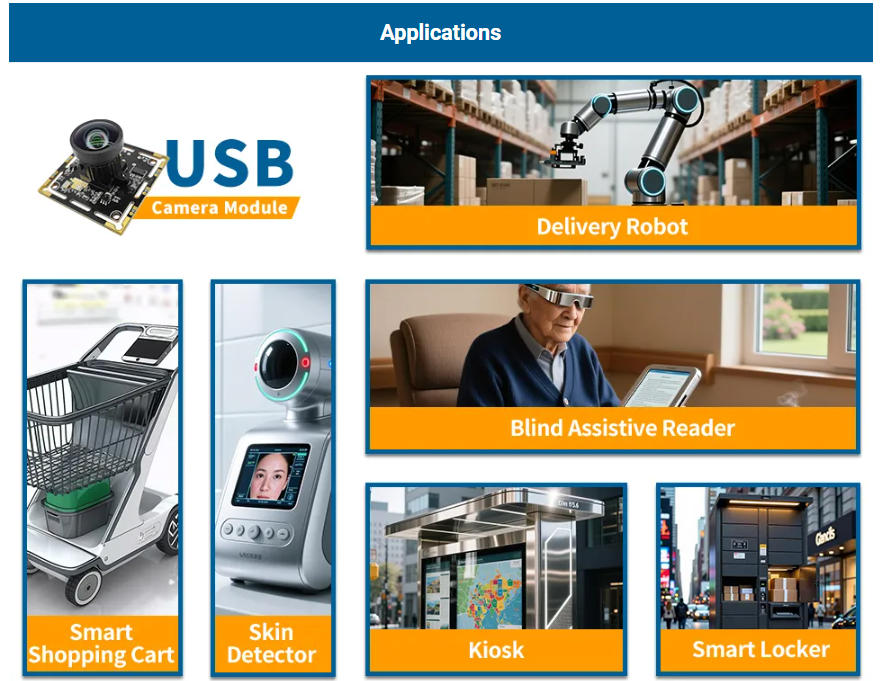
Technical Features: Highly integrated, ultra-low power consumption, and plug-and-play functionality. Standard interfaces include USB and MIPI.
- Laptops / All-in-One PCs: Facial recognition login (Windows Hello) and video conference background blurring.
- Smart Speakers: Video calling on screened devices and home monitoring.
- Smart Doorbells & Door Locks: Visitor identification and remote two-way audio.
- Educational Tablets: Online classrooms and gesture control.
10. Medical Imaging AI Cameras
Technical Features: Ultra-high-precision imaging, multimodal recognition capabilities, and strict compliance with medical data security standards.
- Radiology Equipment: Automated lung nodule detection (achieving up to 97.3% accuracy) and fracture identification.
- Endoscopy: Real-time lesion annotation and surgical navigation.
- Pathology Scanners: Digital slide section analysis.
- Ophthalmology: Retinal screening and retinopathy detection.
III. Classification by Interface / Packaging (Hardware Selection)
| Interface Type | Technical Characteristics | Typical Products |
|---|---|---|
| USB Camera | Plug-and-play, high compatibility, universal standard | External PC webcams, video conferencing terminals |
| MIPI Camera | Ultra-low latency, direct processor connection, lightweight | Smartphones, automotive ADAS, embedded development boards |
| IP / Network Camera | Remote transmission, network-native, RTSP protocol support | Security surveillance, smart doorbells |
| GigE / Industrial Interface | Ultra-high speed, long-distance transmission, reliable locking | Industrial inspection, machine vision systems |
Summary: Camera Module Selection Guide
| Application Scenario | Recommended Camera Type | Core Selection Rationale |
|---|---|---|
| Home Care & Safety | Smart Security Camera (with Edge AI) | Anomaly detection, real-time alerts, and reliable night vision. |
| Autonomous Driving | LiDAR + Automotive Camera Module | High-precision distance measurement, wide dynamic range, and automotive-grade reliability. |
| Production Line QA | Industrial Camera / Smart Camera | High-speed acquisition, micron-level accuracy, and multispectral capabilities. |
| Agricultural Monitoring | Multispectral Drone Camera | Vegetation index analysis and early-stage crop disease detection. |
| Retail Analytics | RGB-D Camera | Accurate foot traffic counting, heat mapping, and shopper behavior analysis. |
| Medical Diagnosis | High-Resolution Medical Camera | Clear lesion recognition, regulatory compliance certification, and seamless PACS integration. |
Contact for Custom AI Camera Module Solutions
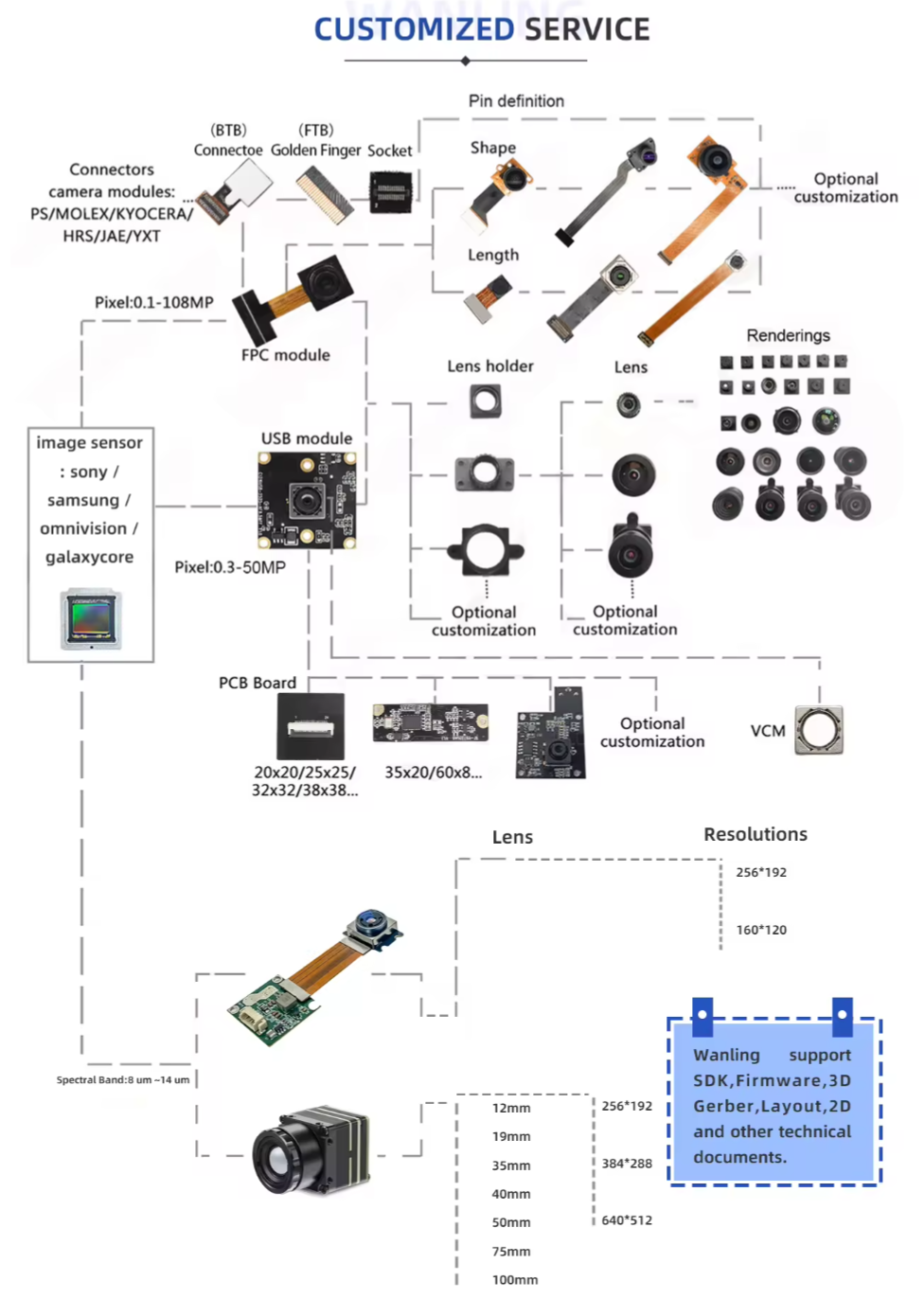
Need custom lens configurations, specific sensors (Sony, OmniVision), or custom NPU integration? Contact our engineering team today:
- WhatsApp / WeChat / Mobile: +86 13713792667
- Email: chinaok321@gmail.com
- Official Website: www.joyllon.com
📞 Contact US now!
- - Need a Prototype or Datasheet?
- Get Real Testing Videos?
- Request a Product Catalog & Price List? (Low MOQ / OEM/ODM / Sample supported? - 🌐 Official Website: www.joyllon.com
- 💬 Tel: +86 137 1379 2667 ( only email, it is formal)
- ✉️ Corporate Email: b2b@joyllon.com and chinaok321@gmail.com (Get a Free Quote within 24 Hours)
👉or fill in below form, we will answer you within 24Hrs.