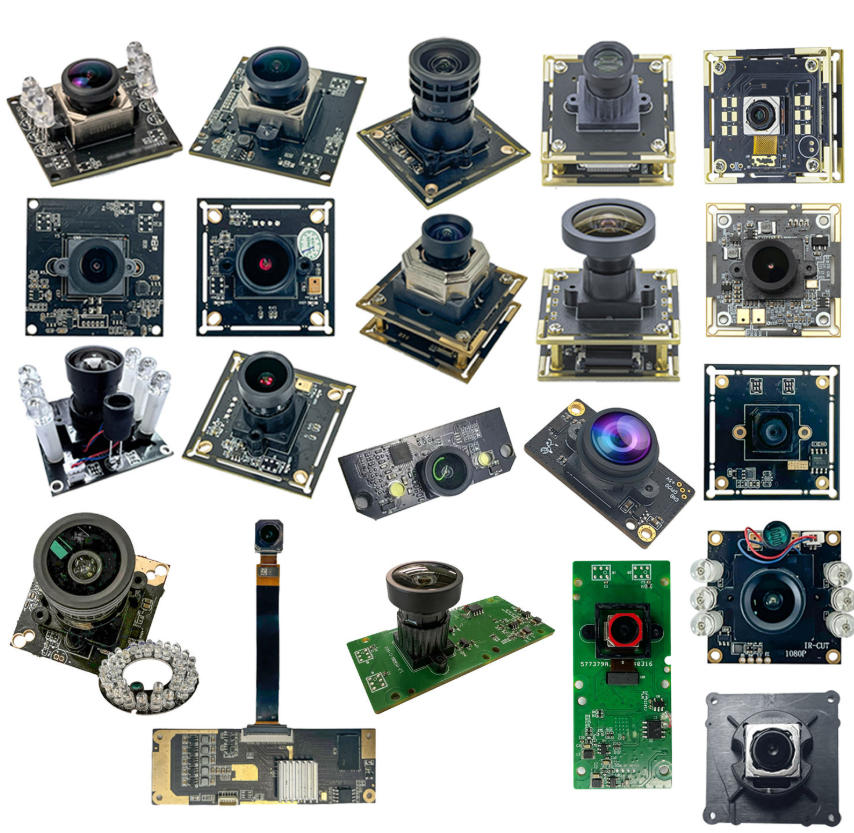
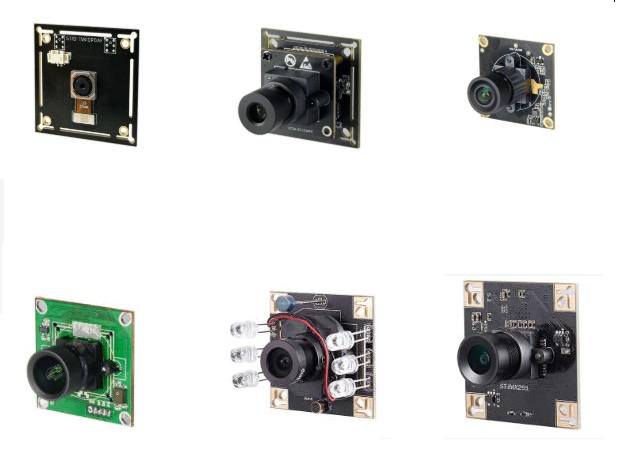
Comprehensive Guide to Low-Light Camera Modules: Core Principles, Working Modes, and Applications
In the realm of embedded vision and smart hardware development, the Low-Light Camera Module has become an indispensable core component. It is a compact imaging system specifically engineered to capture clear, usable images in poorly illuminated or nearly pitch-black environments. Unlike the standard cameras found on typical smartphones, the sole, critical mission of a low-light module is to solve the industry pain point of “blindness in the dark.”
Core Working Principles: How It Sees in the Dark
To achieve high-quality imaging under low-light or zero-light conditions, a low-light camera module relies on a deep combination of advanced hardware upgrades, image signal algorithms, and infrared optical technologies:
1. Hardware Enhancements: Maximizing Light Sensitivity
This is the fundamental layer for any night-vision hardware.
- High-Sensitivity Image Sensors: These modules deploy cutting-edge Back-Illuminated (BSI) sensors, such as Sony’s STARVIS™, STARVIS 2, or OmniVision’s OnyxMax™ series. They convert faint ambient light (like starlight or distant city glow) into high-quality electrical signals. Their minimum illumination ratings can drop to 0.001 Lux or lower—far surpassing standard consumer cameras.
- Back-Illuminated (BSI) Structure: By flipping the traditional sensor architecture and placing the circuitry behind the photosensitive layer, BSI tech allows incoming light to hit the photodiodes without obstruction, drastically improving Quantum Efficiency (QE) in dim settings.
2. Image Processing Optimization: Making the Image Crisp
While the hardware is responsible for “seeing” the faint light, the algorithm ensures it is “readable” by humans or Edge AI models.
- ISP (Image Signal Processor) & 3D Noise Reduction: The built-in ISP automatically fine-tunes exposure times, gain, and white balance in real-time. Utilizing advanced 3D Noise Reduction (3DNR) and contrast enhancement algorithms, it brightens deep shadows while actively suppressing digital noise, outputting natural, clean video streams.
3. Infrared Optics: Achieving 0 Lux “Absolute Dark” Visibility
When ambient light drops to absolute zero, active infrared technology takes over.
- Active Infrared Illumination: The camera module is usually equipped with or connected to infrared (IR) LEDs that emit light invisible to the human eye (typically 850nm or 940nm). The sensor captures the reflected IR light, generating a sharp, high-contrast black-and-white image.
- Dual-Filter IR-Cut Switch: Most industrial-grade modules feature a mechanical IR-Cut filter. During the day, the filter blocks infrared light to prevent color distortion; at night, the filter mechanically shifts away, allowing the sensor to fully absorb IR light for maximum night vision capability.
Understanding Different Camera Modes
Depending on power constraints, ambient light levels, and clarity requirements, low-light camera modules operate across several distinct modes:
| Working Mode | Visual Output | Technical Focus | Best Use Case |
| Low-Light High-Sensitivity (Full-Color) | 24/7 Vibrant Color | Relies solely on starlight sensors and ISP tuning. No active illumination required. Highly natural but technically demanding. | Nighttime city surveillance, urban monitoring with faint ambient light. |
| Day/Night Mode (Mechanical Switch) | Color (Day) / B&W (Night) | The current industry standard. Switches the mechanical IR-Cut filter dynamically, sacrificing color at night to gain extreme image sharpness. | Smart security systems, outdoor all-weather cameras. |
| Infrared-Assisted Mode | Monochromatic B&W | Actively fires IR LEDs to illuminate scenes in 0 Lux (complete darkness). Illumination distance depends heavily on LED power. | Indoor dark warehouses, pipeline inspections, nocturnal wildlife tracking. |
| Slow Shutter (Frame Accumulation) | Brightened Overall Frame | Extends the shutter exposure time to gather more photons. Not suitable for moving targets due to severe motion blur. | Static environment observation, astrophotography, automated smart agriculture. |
Primary Application Scenarios
Thanks to their superior low-light performance, these modules are widely used across embedded vision systems, edge AI applications, and specialized industrial sectors:
- AI Security & Surveillance: Providing around-the-clock, high-definition security mapping for residential areas, warehouses, industrial parks, and parking structures.
- Smart Automotive & Intelligent Traffic: Serving as a vital vision sensor for Advanced Driver Assistance Systems (ADAS) to detect pedestrians, lane markings, and road hazards at night.
- Smart Home Ecosystems: Empowering smart video doorbells, digital peepholes, and indoor/outdoor baby/pet monitors with robust night-watch capabilities.
- Industrial & Specialized Inspections: Deployed in nocturnal drone mapping, automated factory pipeline checks, medical microscopic imaging, and low-light scientific research.
💡 Summary
An embedded Low-Light Camera Module is a highly integrated solution. It is far more than just a camera with a bigger sensor; it is a meticulous blend of ultra-sensitive CMOS hardware, robust ISP algorithms, and precise infrared optics. It is this exact ecosystem that grants edge AI devices and smart hardware their true “24/7 all-weather vision.”
📞 Contact & Sourcing Support
Are you looking to integrate high-performance imaging into your next project? As a professional camera module manufacturer, we provide custom design services and factory-direct supply.
- Official Website: www.joyllon.com
- WhatsApp / WeChat: +86 137 1379 2667
- Business Email: chinaok321@gmail.com
📞 Contact US now!
- - Need a Prototype or Datasheet?
- Get Real Testing Videos?
- Request a Product Catalog & Price List? (Low MOQ / OEM/ODM / Sample supported? - 🌐 Official Website: www.joyllon.com
- 💬 Tel: +86 137 1379 2667 ( only email, it is formal)
- ✉️ Corporate Email: b2b@joyllon.com and chinaok321@gmail.com (Get a Free Quote within 24 Hours)
👉or fill in below form, we will answer you within 24Hrs.