Field
Value
URL slug
imx415-98-ir-cut-camera-tb6612fng-motor-driver-board
SEO title (59 chars)
IMX415 8MP 98° IR-CUT Camera + TB6612FNG Driver Board
Meta description (152 chars)
Specs, use cases and integration guide for the JOYLLON IMX415-98 IR-CUT 8MP camera module (Sony IMX415, 1/2.8″, F2.0, 98° FOV) and TB6612FNG motor driver.
H1
IMX415 8MP Camera Module with 98° Wide Angle Lens (IR-CUT) + JOYLLON TB6612FNG Motor Driver Board
Primary keyword
IMX415 8MP camera module
Secondary keywords
98 degree wide angle camera module, IR-CUT camera module, 8MP camera for license plate recognition, TB6612FNG motor driver board, dual DC motor driver, embedded vision module
People-also-ask targets
What sensor does the IMX415-98 use? · What is IR-CUT? · TB6612FNG vs L298N? · Can it be customised?
Schema to keep
Article + Product ×2 + FAQPage + BreadcrumbList (see the HTML version)
Internal links (8)
Home, IR Cut Camera Module, Robotics Camera Module, MIPI Camera Module, USB3.0 Camera Module, Global Shutter, HDR, Dual Lens, 13MP, Custom Solutions, Embedded Vision Guide
Image alt text
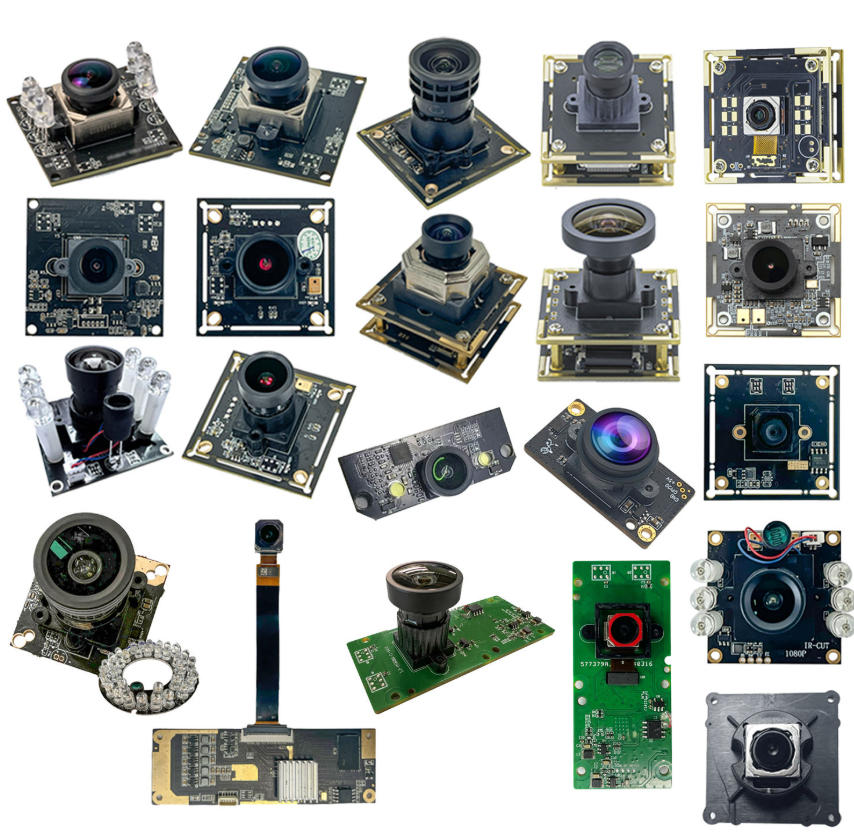
“JOYLLON IMX415 8MP 98-degree IR-CUT camera module and TB6612FNG dual motor driver board on a robot chassis”
Author / E-E-A-T
JOYLLON embedded vision engineering team · Shenzhen factory since 2013 · 100% in-house testing
TLDR — the 60-second answer
- IMX415-98 IR-CUT Camera is an 8.29 MP (3840 × 2160) camera module built on the Sony IMX415 1/2.8″ back-illuminated (STARVIS-class) CMOS sensor, with an F2.0 / 3.95 mm lens giving a 98° field of view at under 1% distortion.
- It ships as a 24-pin board-level module with an IR-CUT (ICR) mechanical filter, so the same unit delivers true colour by day and near-IR-sensitive night vision after dark.
- It is tuned for AI inference workloads: face recognition, road marking recognition and license plate recognition (LPR/ANPR).
- The JOYLLON TB6612FNG Motor Driver Board is the motion half of the stack — a Toshiba TB6612FNG dual H-bridge that drives two DC motors (or one stepper) at 1.2 A average / 3.2 A peak per channel, up to 15 V motor supply.
- Together they form a compact “see + move” kit for AGVs, inspection robots, smart gates and mobile AI cameras: one 4K perception input, one efficient motion output.
What is the IMX415-98 IR-CUT camera module?
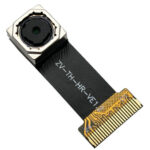
The IMX415-98 IR-CUT Camera is a board-level 8-megapixel embedded camera module that combines the Sony IMX415 CMOS image sensor with a fixed 98° wide-angle lens and a switchable IR-cut filter. It outputs a 3840 × 2160 (4K UHD) stream through a 24-pin interface, so it can be dropped straight into an ARM, Rockchip, NVIDIA or similar host board without external capture hardware.
Two design choices define it. First, the 98° lens with <1% distortion: wide coverage without the barrel warp that breaks downstream computer-vision geometry. Second, the IR-CUT mechanism: a mechanical filter that slides out of the optical path at night, letting near-infrared light reach the sensor while blocking it during the day for accurate colour.
Full specifications
| Parameter | Value |
| Model name | IMX415-98 IR-CUT Camera |
| Sensor | Sony IMX415 |
| CMOS optical size | 1/2.8″ |
| Camera type | Colour (with IR-CUT day/night switching) |
| Recommended recording pixels | Approx. 8.29 MP (3840 × 2160) |
| Image size | Diagonal 6.43 mm |
| Unit cell size | 1.45 µm (H) × 1.45 µm (V) |
| Aperture | F2.0 |
| Focal length | 3.95 mm |
| Field of view (FOV) | 98° |
| Distortion | < 1% |
| Main power / signal connector | 24-pin |
| Graphics / interface integration | Integrated (on-board) |
| Key applications | Facial recognition, road marking recognition, license plate recognition, AI vision |
| Outline dimensions | 38.00 × 24.75 mm board outline, approx. 30.00 mm overall height, 1.60 mm PCB thickness (20.00 mm mounting dimension — see mechanical drawing) |
| Documentation | Official JOYLLON Wiki resources available on request |
Spec note: pin-out, lane configuration, power-rail voltages and the complete mechanical drawing are provided in the official JOYLLON Wiki — email b2b@joyllon.com for the datasheet package, sample test video and ISP tuning notes for your host platform.
Why 98° FOV with <1% distortion matters for AI vision
Wide-angle lenses normally trade geometry for coverage: push past ~90° on a cheap lens and straight lines bow outward, which is fatal for algorithms that assume a rectilinear image. Holding distortion below 1% across the frame means:
- License plate recognition keeps plate edges and character spacing consistent, even when the vehicle sits at the edge of the lane rather than dead centre.
- Road marking recognition — lane lines, stop lines, arrows — stays geometrically trustworthy, so lane logic and mapping do not drift at the frame borders.
- Face recognition pipelines avoid the stretched features that drop match scores on wide-FOV cameras.
- One camera replaces two. At 98° you cover a doorway, a checkout lane or a single traffic lane from one module, cutting BOM cost, cabling and ISP tuning time.
Pair that with an F2.0 aperture and a 3.95 mm focal length and you get a lens fast enough for indoor and dusk scenes while keeping depth of field sufficient from roughly half a metre to infinity.
Low-light performance: high SNR, not just more gain
The IMX415 is a back-illuminated (BSI) sensor: photodiodes sit above the wiring layers, so more photons reach each pixel. With a 1.45 µm pixel on a 1/2.8″ optical format, the advantage in dim conditions is signal-to-noise ratio rather than raw amplification. A conventional camera asked to see at dusk boosts gain until noise floods the frame; the IMX415 delivers a cleaner base image, so edges survive at night, colour stays recognisable for re-identification, and the IR-CUT switch to night mode produces usable monochrome near-IR imagery instead of muddy grey.
Applications: where this module actually gets deployed
1. Facial recognition
Access control terminals, smart door locks, attendance kiosks and visitor management. 8.29 MP gives enough pixels on a face at 1–3 m to meet the input resolution most recognition models expect, and the wide FOV tolerates users who do not stand perfectly centred. See also JOYLLON IR Cut camera modules and 13 MP camera modules.
2. Road marking recognition
Lane-line detection, curb and crosswalk detection, road-surface defect surveys, ADAS/AGV navigation aids. Low distortion is the deciding factor — the algorithm reads geometry, not just texture.
3. License plate recognition (LPR / ANPR)
Parking barriers, toll lanes, community gates, forecourts and roadside enforcement. Wide coverage captures a full lane; high SNR handles headlights, shadow and night-time IR operation.
4. Robotics and mobile platforms
VSLAM, obstacle detection, docking and shelf inspection on AGVs, AMRs and service robots — exactly where the TB6612FNG board comes in. Explore the Robotics Camera Module range.
5. Industrial and commercial inspection
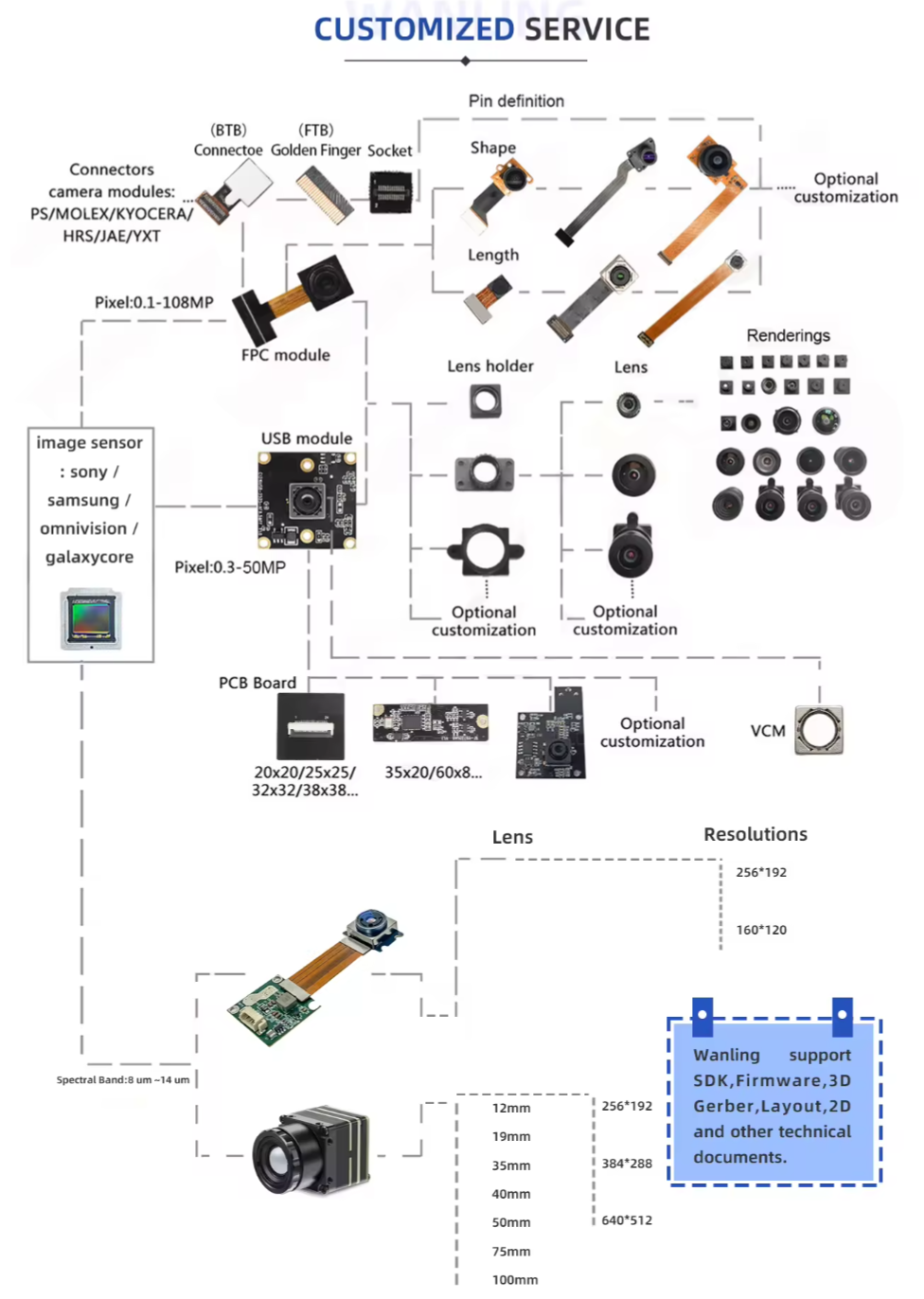
Conveyor monitoring, retail analytics, kiosks and interactive displays. For a different optical format or connector, the custom camera module service covers lens swaps, FPC reshaping and ISP tuning from prototype to mass production.
JOYLLON TB6612FNG Motor Driver Board: the motion half of the stack
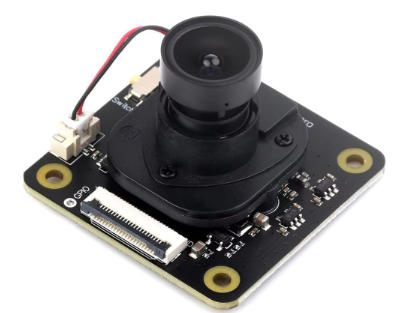
A vision-guided robot needs two things: something that sees and something that moves. The JOYLLON TB6612FNG Motor Driver Board is built around Toshiba’s TB6612FNG, a dual H-bridge driver IC with MOSFET outputs. It is the natural companion to a compact camera module because it is small, efficient and runs happily from the same battery rail as the rest of a mobile platform.
TB6612FNG chip-level characteristics
| Parameter | Value |
| Channels | 2 × H-bridge (two DC motors, or one bipolar stepper) |
| Motor supply voltage (VM) | Up to 15 V max. |
| Logic supply voltage (VCC) | 2.7 – 5.5 V (3.3 V and 5 V MCU friendly) |
| Output current | 1.2 A average per channel; 3.2 A peak |
| Output ON resistance | Approx. 0.5 Ω (upper + lower, typ. @ VM ≥ 5 V) |
| Control modes | CW, CCW, short brake, stop |
| PWM capability | High-frequency PWM speed control (up to 100 kHz class) |
| Protection & power saving | Standby (power-save) system, built-in thermal shutdown, low-voltage detection |
Practical translation: independent direction and speed control for two motors from four logic pins plus PWM, a standby pin that drops the board to near-zero idle current, and thermal shutdown that saves the board when a stalled wheel draws too much for too long.
TB6612FNG vs L298N vs DRV8833
| Driver | Per-channel current | Efficiency | Best for |
| TB6612FNG | 1.2 A avg / 3.2 A peak | MOSFET, low R_DS(on), low heat | Battery robots, 2- and 4-wheel rovers, small AGVs |
| L298N | 2 A (with a big heatsink) | Bipolar, ~1.8 V+ dropout, runs hot | Legacy designs, higher-voltage bench projects |
| DRV8833 | ~1.5 A | MOSFET, very small | Micro robots, tiny gear motors, low-current steppers |
Compared with the classic L298N, TB6612FNG wastes far less voltage as heat, so more of your battery reaches the motors — the reason it has become the default choice for robotics and maker platforms alike.
Board-level details: the table lists TB6612FNG chip characteristics. Pin headers, silkscreen names, on-board regulator and connector layout depend on the JOYLLON board revision — request the pin-out and schematic from b2b@joyllon.com before wiring your first prototype.
Integration guide: building a vision-guided robot with both boards
A realistic reference build — a two-wheel inspection rover using the IMX415-98 for perception and the TB6612FNG board for drive.
What you need
- Host SBC or SoC (ARM/Rockchip/NVIDIA class) with a camera input matching the module’s 24-pin interface
- IMX415-98 IR-CUT camera module + 24-pin mating cable
- JOYLLON TB6612FNG motor driver board, two DC gear motors, separate motor battery
- Common ground between logic and motor supplies; decoupling near the VM pin
Step-by-step
- Mount the camera for the algorithm, not for looks. Fix the module rigidly at the planned height and tilt; because distortion is <1%, a one-time calibration holds across the frame.
- Bring up the video path first. Confirm a clean 3840 × 2160 stream before touching motors. Lock exposure and white balance for your scene; leave auto-gain headroom for the day/night IR-CUT switch.
- Wire the driver with a shared ground. VM to the motor pack (≤15 V), VCC to the MCU logic rail (3.3 V or 5 V), grounds tied together. Keep motor current loops away from the camera cable.
- Drive with PWM, not with voltage. IN1/IN2 for direction, PWM for speed; use short brake for quick stops and stop (coast) when you want the rover to roll out.
- Pull STBY high only when moving. That one pin is your battery-life lever on a mobile platform.
- Close the loop. Run your detection or lane/line model on the 4K stream, map the result to a steering correction, and feed differential PWM to the two channels.
- Validate in the worst light. Test at dusk and with IR illumination on, since that is when the IR-CUT switch happens — and when SNR differences show up.
Interface and compatibility notes. The module presents a 24-pin main connector with integrated interface electronics, aimed at embedded hosts rather than desktop capture cards. JOYLLON supplies driver and ISP tuning guidance for common platforms; if your target processor is unusual, send us the part number and we will confirm lane count, power rails and available MIPI or USB3.0 alternatives.
How to choose: is the IMX415-98 the right module for you?
| Your requirement | Recommended JOYLLON option |
| Wide coverage, 4K detail, day/night in one unit | IMX415-98 IR-CUT Camera (this module) |
| Moving platforms / fast shutter, no motion blur | Global Shutter Camera Module |
| Variable working distance, sharp focus at any range | Auto Focus Camera Module |
| Extreme brightness contrast (entrances, backlit scenes) | HDR Camera Module |
| Depth sensing, 3D, liveness detection | Dual Lens Camera Module |
| PC / Linux host with no MIPI port | USB3.0 Camera Module |
| Non-standard size, connector or lens | Custom Camera Module (OEM/ODM) |
Our verdict
If your product needs 4K detail over a wide area, in daylight and darkness, without a separate night camera, the IMX415-98 is the straightforward pick: the 98°/<1% optics protect your vision algorithms, the IMX415’s SNR covers the night shift, and the IR-CUT filter removes the day/night compromise. Add the TB6612FNG driver board and the same platform can act on what it sees — the difference between a camera and a robot.
FAQ
What sensor does the IMX415-98 IR-CUT camera module use? It uses the Sony IMX415 CMOS sensor: 1/2.8″ optical format, 6.43 mm diagonal image size, 1.45 µm × 1.45 µm pixel, colour, with a recommended recording resolution of approximately 8.29 MP (3840 × 2160).
What is the field of view and distortion? 98° field of view with distortion under 1%, via an F2.0 aperture and 3.95 mm focal length lens. Low distortion keeps geometry reliable for lane, plate and face detection models.
What does IR-CUT mean, and why does it matter? IR-CUT (ICR) is a mechanical infrared-blocking filter that sits in front of the sensor during the day for accurate colour and slides out at night so near-infrared light reaches the sensor. One module covers both true-colour daytime imaging and sensitive night vision.
What interface does the module use? A 24-pin main connector with integrated interface electronics, designed for embedded host boards. Full pin-out, power rails and supported platforms are documented in the official JOYLLON Wiki.
How many motors can the JOYLLON TB6612FNG board drive? Two DC motors independently, or one bipolar stepper motor, at up to 1.2 A average / 3.2 A peak per channel with a motor supply up to 15 V. Logic runs from 2.7–5.5 V, so it works with 3.3 V and 5 V microcontrollers.
Is TB6612FNG better than L298N? For battery-powered robots, generally yes: MOSFET outputs with roughly 0.5 Ω total ON resistance drop far less voltage and run much cooler than the bipolar L298N. It also adds standby power-save, thermal shutdown and low-voltage detection.
Can I get a customised version of this camera module? Yes. JOYLLON is a camera module manufacturer and factory (since 2013) offering OEM/ODM customisation: lens and FOV changes, FPC cable shape, connector type, housing dimensions and ISP tuning, from prototype through mass production.
Where can I get the datasheet, Wiki and samples? Email b2b@joyllon.com or chinaok321@gmail.com, or message +86 137 1379 2667 (WeChat/WhatsApp). We provide official Wiki resources, test videos, catalogues and low-MOQ samples with a quote within 24 hours.
Get a quote / datasheet
- 🌐 www.joyllon.com
- ✉️ b2b@joyllon.com · chinaok321@gmail.com
- 💬 WhatsApp / WeChat: +86 137 1379 2667
- 📄 Custom Camera Module Solutions · Embedded Vision Ecosystem Guide
Topics: IMX415 camera module · 8MP camera module · 98° wide angle lens · IR-CUT camera · license plate recognition camera · road marking recognition · facial recognition camera · TB6612FNG motor driver · dual H-bridge driver · MIPI camera module · embedded vision
📞 Contact US now!
- - Need a Prototype or Datasheet?
- Get Real Testing Videos?
- Request a Product Catalog & Price List? (Low MOQ / OEM/ODM / Sample supported? - 🌐 Official Website: www.joyllon.com
- 💬 Tel: +86 137 1379 2667 ( only email, it is formal)
- ✉️ Corporate Email: b2b@joyllon.com and chinaok321@gmail.com (Get a Free Quote within 24 Hours)
👉or fill in below form, we will answer you within 24Hrs.